

How to Create a Standout Nonprofit Annual Report + Template
For nonprofits like yours, a thoughtfully written and well-designed annual report is an invaluable fundraising tool. It allows you to recognize everyone who has helped you make progress toward your goals over the past year—donors, volunteers, sponsors, funders, and other community members—helping you strengthen existing relationships and cultivate new ones. Plus, it boosts your organization’s reputation through showcasing your successes and increasing transparency.
With so much at stake, you need to take annual report creation seriously to ensure it’s a useful resource for your organization’s community. In this guide, we’ll cover everything you need to know about nonprofit annual reports, including:
- Nonprofit Annual Report FAQs
- Annual Report Template & Elements to Include
- Choosing a Format for Your Annual Report
- Nonprofit Annual Report Best Practices
- Top Nonprofit Annual Report Examples
These tips and strategies will help you create a digestible, engaging annual report that inspires your audience to support your organization’s work long-term. Let’s get started!

Nonprofit Annual Report FAQs
Before we dive into how to create your nonprofit’s annual report, let’s answer some common questions about these vital documents to lay the groundwork.
What is a nonprofit annual report?
A nonprofit annual report is a resource that highlights your organization’s major accomplishments, builds confidence in your organization, inspires readers to support your mission, and thanks everyone who makes your work possible. Your report can be physical or digital depending on your audience and budget (more on this later!)
Nonprofits typically compile and release these reports every year, although the type we’re talking about in this guide isn’t mandatory—just customary and highly encouraged. The term “annual report” is sometimes also used to refer to tax documents like IRS Form 990 or certain state government filings, which are required for your organization to maintain its 501(c)(3) status, so just be aware of this as you go about your nonprofit’s daily operations.
Why should my nonprofit create an annual report?
Despite technically being optional, annual reports can benefit your nonprofit in many ways. Usually, the ultimate goals—and the ultimate benefits—of your annual report are simple: retaining current supporters and acquiring new ones.
To accomplish these goals, your annual report should fulfill several smaller purposes, each of which benefits your organization’s long-term health:
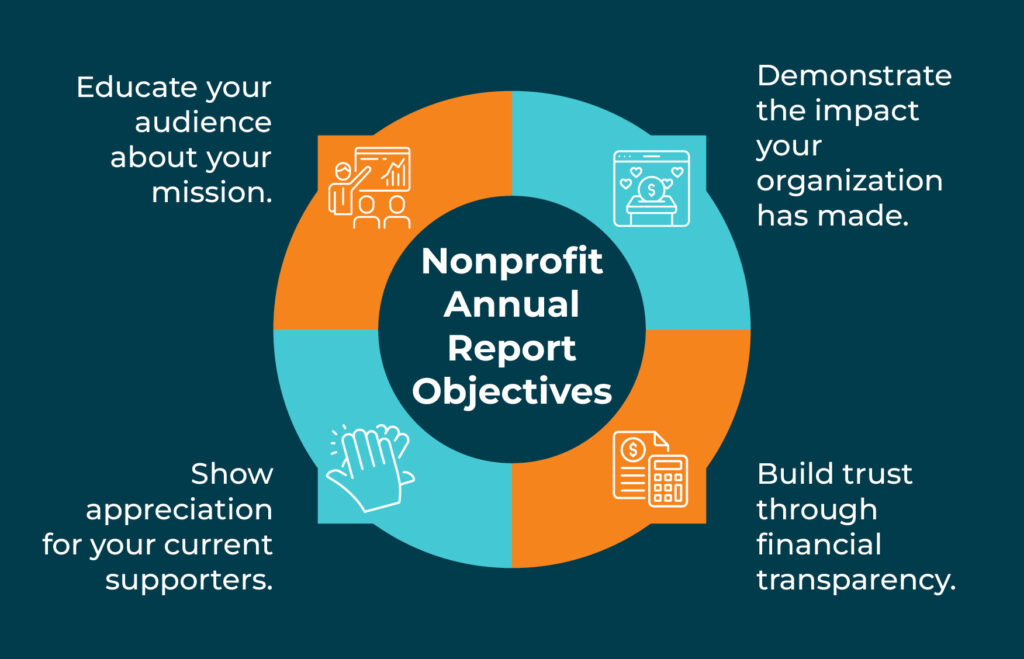
- Educate your audience about your mission and current initiatives that seek to further it.
- Demonstrate the impact your organization has made through data, storytelling, and multimedia content.
- Build trust through financial transparency, explaining your spending and revenue generation in an easy-to-understand format.
- Show appreciation for your current supporters so they know you value them and want to continue contributing their time and resources.
Plus, although annual reports reflect on the past year, they can establish a framework for your nonprofit to move forward and achieve more in the coming year!
How do annual reports and prospect research intersect?
It’s common for nonprofits to include major donors’ names and the projects they contributed to somewhere in their annual reports. This information feeds many prospect research databases—DonorSearch, for example, references hundreds of annual reports to collect data on major donors’ giving history—and helps major gift officers identify new potential donors to reach out to.
Let’s say your nonprofit works to reduce food insecurity for children in your area, and a local hospital highlighted a major donor in their annual report who contributed to their pediatric intensive care unit. In that case, your organization might want to target that person as a potential major donor, since you can infer that they’re likely interested in helping children in need. The giving tier they’re listed under in that report may also help you understand their giving capacity.

Annual Report Template & Elements to Include
If you’re creating your nonprofit’s first-ever annual report or looking to switch up your format, it can be useful to work off of a template. The template below is a representation of a page of your annual report or a shortened digital version you can deliver via email. The use of graphics and images provides a suggestion for how to effectively divide up the space and produce a more visually appealing layout:

This template includes the four most essential elements of a nonprofit annual report, which we’ll discuss in more detail in the following sections.
1. Clear Mission Statement
Dedicated, long-time supporters and individuals who are brand new to your organization’s community will both read your annual report. Each of these groups of readers should be confident in their understanding of your organization’s mission before diving into the data, which is why you should write out your mission statement at the beginning of the report.
Keep your mission statement to one or two sentences to help it stick in readers’ minds, and ensure it includes the most important details about why your organization does what it does every day. One nonprofit that does this particularly well is the American Red Cross, whose mission statement reads, “The American Red Cross prevents and alleviates human suffering in the face of emergencies by mobilizing the power of volunteers and the generosity of donors.”
You can also include your vision statement alongside your mission statement. Your vision statement is a sentence that describes the future state your nonprofit is working toward—i.e., what you hope the world will look like when your mission is accomplished.
2. Major Achievements From the Past Year
The majority of your annual report should focus on the activities and projects your organization completed over the past year, from hosting fundraising events to coordinating volunteer efforts to delivering services in your community. Reflect on your organization’s audience and what would be most interesting to them, but make sure to share your biggest accomplishments!
First, use your fundraising tools to break down your achievements into statistics your readers can easily understand. You might report the total amount your donors gave, the number of hours your volunteers worked, or how many social media followers you gained. Then, format that data using graphs and visualizations to make it easier for readers to understand, and supplement the numbers with photos and true stories about your work to further emphasize your impact.
3. Financial Information
It’s no secret that your donors want to know how your nonprofit is using their money to further your mission. Being honest and transparent about your spending and fundraising builds trust with your existing supporters. Plus, it shows potential donors that your nonprofit can manage funds responsibly and effectively, which can make them more likely to give.
However, some high-impact donors who are very financially literate will want to see detailed records of your nonprofit’s financial status, while others would prefer an easy-to-follow, summarized version of the data. To accommodate both of these preferences, include graphical representations of key financial information in the body of your annual report, then attach detailed financial statements as appendices for donors who want to learn more.
4. List of Major Contributions
In addition to showcasing your nonprofit’s success, your annual report is also about thanking those who helped you achieve those goals. The best way to do this is by listing out and thanking your major donors, board members, and organizational leadership.
Additionally, include a general statement of thanks to your volunteers and donors at all levels. Although you should have a more personalized thank-you cadence for each supporter when they contribute, a general shoutout will make them feel appreciated and seen by your organization!
Choosing a Format for Your Annual Report
Once you add each of the elements listed above to your annual report, you’ll need to decide how to present the information to your nonprofit’s community. While most organizations share their annual reports on a dedicated page of their websites, how you further publicize it will depend on your audience’s preferences.
A combination of hard-copy and digital annual report materials will generally reach the widest audience. Here are some popular formats in each category to consider:
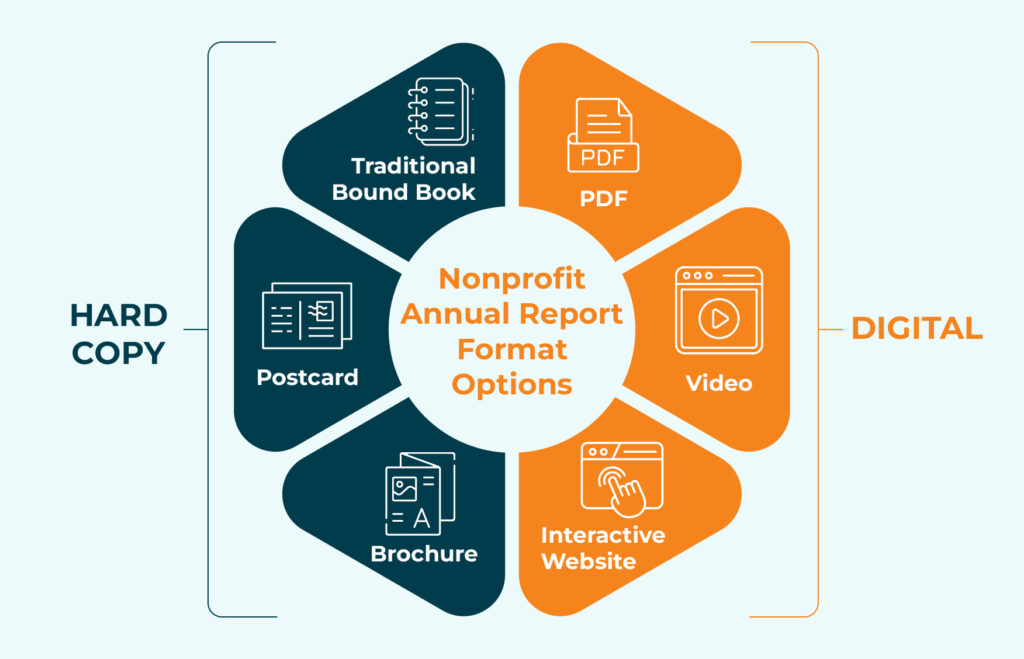
Hard Copy Annual Reports
- Traditional bound book: These can be anywhere from a few to 100 pages long and are great for compiling a large amount of information in a substantial, tangible way. No matter how long your report is, make sure to keep the content engaging and break up the text with plenty of visuals.
- Postcard: If you’d like to maximize digestibility, postcards are a good choice. With well-designed infographics, pictures, and statistics, supporters can very quickly understand how your organization did last year. Because of space limitations, you’ll have to sacrifice some copy, so if you want to tell detailed stories or include a long list of donors, choose a longer-form option.
- Brochure: Still considered a quick read, brochures are a middle ground between a postcard and a book. The folds in a brochure create natural divides to easily section your information and design.
Digital Annual Reports
- PDF: If you want the space that a book offers but don’t want to spend the money or use tons of paper to print it, PDFs are a good solution. You can make them as long or short as you like, embed other digital content like links, videos, and PowerPoint presentations, and easily upload them to your website or attach them to an email.
- Video: Video annual reports show, rather than tell, your audience what your organization has accomplished. Make sure your final video comes across as professional in its editing and production, and recruit outside help if necessary.
- Interactive website: Consider building a webpage or mini-site that houses an interactive version of your annual report. Your audience could click through a photo gallery, expand graphs for a more detailed view, and play multiple short videos, making for an immersive experience.
If you use multiple formats, think about who the primary audience is for each type. Newer, lower-level supporters will likely be happy with condensed versions of your annual report like videos or postcards, while important stakeholders will want to see more comprehensive information in a book or PDF.
Nonprofit Annual Report Best Practices
Now that you know what to include in your annual report and your options for formatting it, you’re likely ready to dive into creating your own. As you compile the report, keep these best practices in mind.
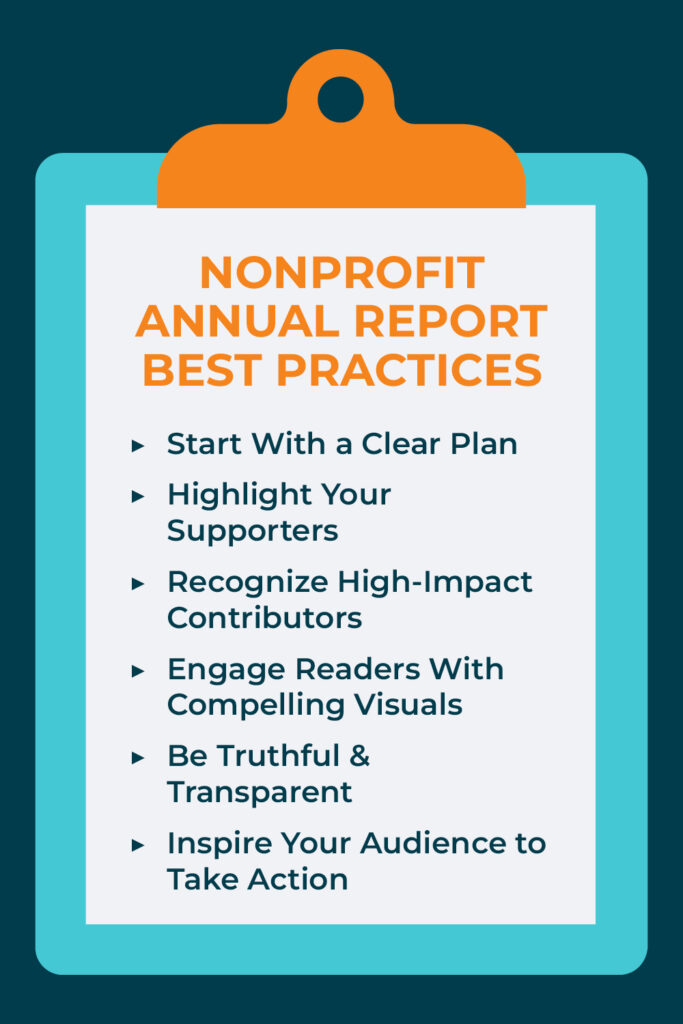
Start With a Clear Plan
The first step for every successful project at your nonprofit is creating a plan, and your annual report is no exception. You’ll likely need the help of multiple team members or departments to assemble all of the information, as well as compile and design the document.
First, determine your report’s audience. This will likely include your current supporters as well as prospective donors, corporate sponsors, and grantmaking foundations. If you have to file your annual report with your state government, they’re also part of your audience.
Then, consider your purpose and strategy. At its core, your annual report should persuade your audience to support your cause. However, you might have smaller objectives, such as highlighting a new project or attracting more local sponsors, that align with your nonprofit’s strategic plan. Because it’s difficult to cover everything your organization has done in a year in a single document, focus your report on three to five core themes that point readers back to your objectives.
Finally, turn to the action aspect of your plan. This part of your strategy may include:
- Delegating responsibilities and creating timelines for team members.
- Interviewing supporters, leaders, and beneficiaries.
- Compiling and formatting financial data.
- Collecting key metrics from fundraising campaigns.
When your nonprofit has a clear plan, the process of creating your report will go more smoothly, and the end result will be more impactful.
Highlight Your Supporters
As we’ve mentioned before, your annual report is a chance to showcase the good your nonprofit has done. That being said, it’s easy for nonprofits to simply celebrate their accomplishments and forget to mention the support that made them possible.
Rather than focusing solely on your achievements, highlight how different projects and programs were realized because of your supporters’ contributions. Every form of support your organization received was essential to your success, so thank them for their monetary gifts, in-kind donations, volunteer time, event participation, advocacy for your cause, and more.
By showing donors and volunteers that your accomplishments were possible because of their support, they’ll know that you’re aware of everything they do. Plus, it demonstrates to potential donors that your nonprofit is built on the support of passionate people and encourages them to join that community.
Recognize High-Impact Contributors
In addition to discussing your supporters’ accomplishments generally, set aside space in your annual report to draw extra attention to the supporters who went above and beyond for your cause. Besides the customary list of major donors and the initiatives they supported, consider including stories about some of these donors or other individuals who have been especially impactful to your cause, such as a loyal volunteer or a long-serving board member.
High-impact supporters like this deserve much more recognition than a simple, generic thank-you message, and your annual report is a great place to publicly show your gratitude. When donors feel appreciated and valued in this way, they’re more likely to continue engaging with your nonprofit long-term.
Engage Readers With Compelling Visuals
Compiling all of your nonprofit’s data and efforts from the past year and condensing them into a single document provides a lot of information for current and prospective supporters to read! This is where strategically placed visuals come in.
Along with capturing and keeping readers’ attention, annual report visuals have many benefits, such as:
- Breaking up blocks of text to make the report more skimmable.
- Transforming complex data into easy-to-understand graphs.
- Translating your mission statement into a tangible need that your audience can develop a passion for.
Incorporate a combination of graphical data visualizations and relevant photos into your report, and make sure to get subjects’ consent if the pictures include any people. For online reports, make some of your visuals interactive for increased engagement.
Be Truthful & Transparent
While your annual report is primarily about highlighting your success, it’s important to be honest about your organization’s progress. Sometimes your projects won’t go as planned—and that’s okay!
By briefly mentioning your missteps and how you plan to correct the issue in the future, you’ll show your audience that you’re proactive in solving problems. Make sure to address:
- The causes of your setbacks (if you know what they are).
- The changes you plan to make in the future based on the information you currently have.
- How you’ll gather and incorporate feedback from your supporters as you address these issues.
Touching on setbacks will paint a full picture of the previous year’s progress and demonstrate to donors that despite your challenges, you were still able to make significant strides in furthering your mission.
Inspire Your Audience to Take Action
Once you’ve effectively conveyed your mission and achievements in your annual report, many readers might be wondering, “What’s next?”
Dedicate space in your annual report to let readers know how they can support your cause. At minimum, include a link or QR code to your online donation page depending on what format you choose. You might also direct readers to other ways they can get involved, such as:
- Signing up to volunteer
- Registering for the first fundraising event of the new year
- Taking advantage of corporate philanthropy programs like employer matching gifts or volunteer grants
Additionally, mention other places where readers can learn more. Include your organization’s website URL, phone number, mailing and email addresses, and social media handles so your audience can stay in touch with you.
Top Nonprofit Annual Report Examples
If you’re ready to start creating your organization’s annual report, here are a few examples from various nonprofit verticals that you can draw inspiration from.
The Nature Conservancy
The Nature Conservancy (TNC) is “a global environmental nonprofit working to create a world where people and nature can thrive.” As in previous years, their 2023 annual report used two eco-friendly formats: an interactive website and a PDF that the international supporter community can download in English, Spanish, or Mandarin.
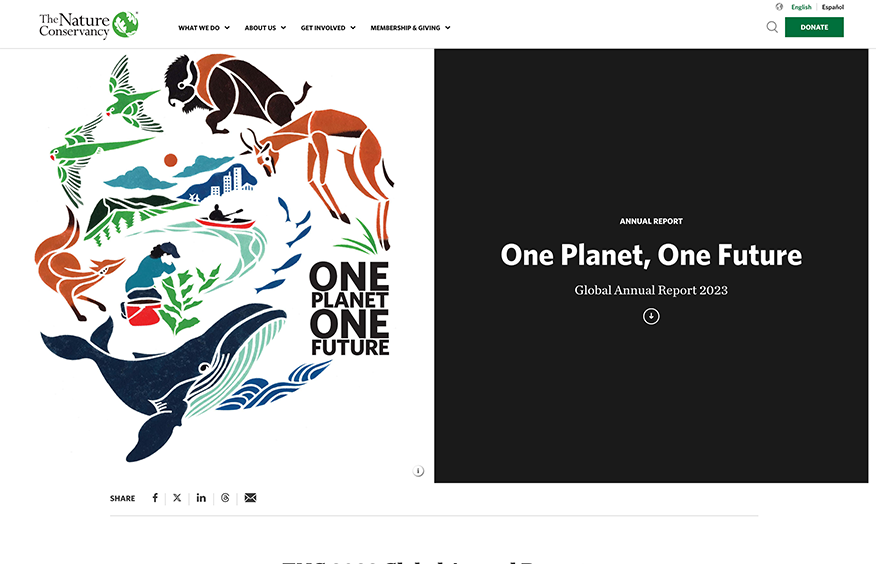
Some highlights of TNC’s report include:
- A concise explanation of their “2030 Goals” strategic plan with accompanying graphics and an overview video.
- Articles on each of their key projects that highlight their donors and partners, along with relevant photos and statistics.
- Multiple formats for their financial data, including a summary bar graph breaking down revenue and expenses, a transparent letter from the CFO, and a detailed balance sheet.
Read The Nature Conservancy’s full annual report.
National FFA Organization
The National FFA Organization (FFA stands for Future Farmers of America) is “the premier youth organization preparing members for leadership and careers in the science, business and technology of agriculture.” FFA compiles a digital annual report that can be viewed as a downloadable PDF or on a dedicated microsite.
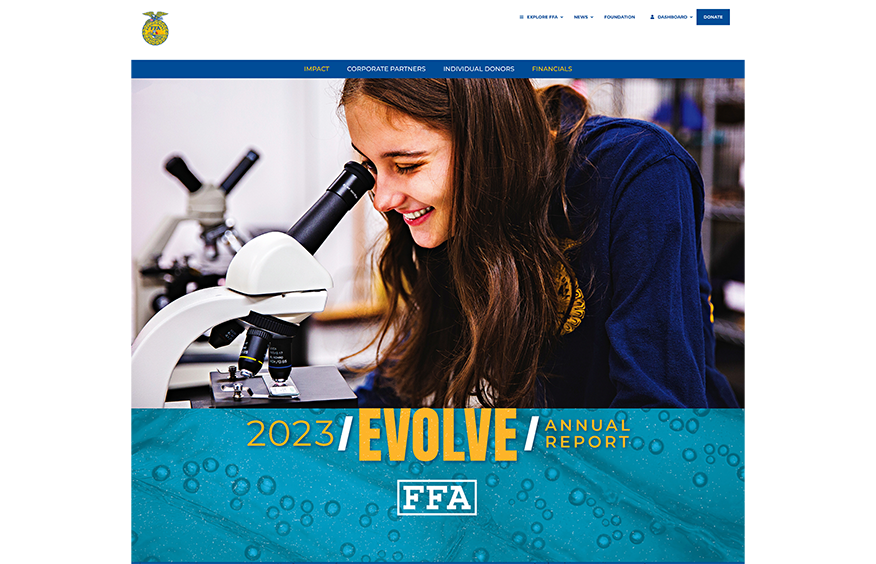
Standout features of FFA’s 2023 annual report include:
- A detailed explanation of the organization’s current strategic plan and how the report’s theme (“Evolve”) corresponds to one of its pillars.
- Testimonials from participants around the United States scattered throughout the report.
- Branded graphics that compile and summarize statistics about all of the 9,000-plus local FFA chapters.
Read the National FFA Organization’s full annual report.
Smithsonian Institution
The Smithsonian Institution’s mission is to promote “the increase and diffusion of knowledge,” which it does through the 21 museums and one zoo under its control. Because there are so many cultural organizations within this one nonprofit, it produces an extremely comprehensive digital book and PDF for its annual report each year.
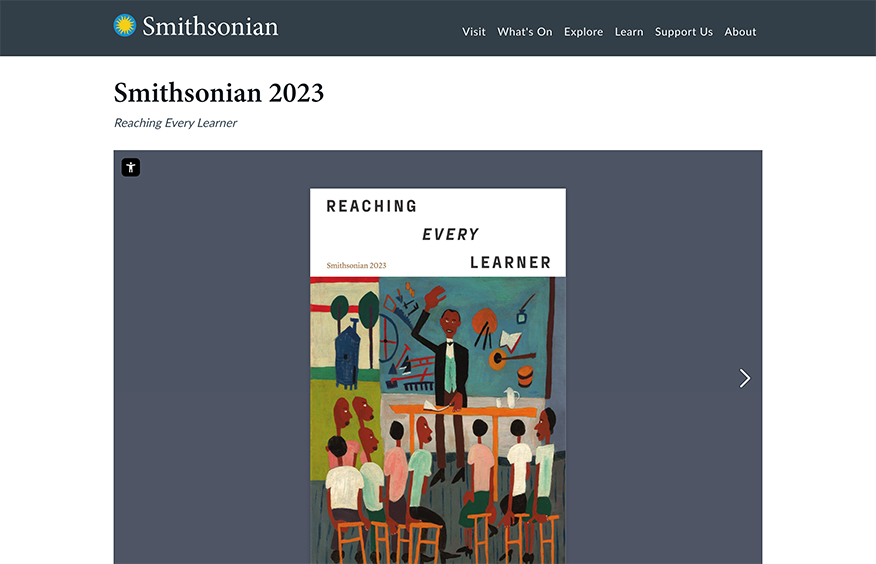
Notable characteristics of this organization’s 2023 annual report include:
- Large statistics beside each impact narrative that catch the reader’s eye, along with a personal story to illustrate the effects of their programs.
- A thorough, well-organized supporter list of corporate sponsors and major donors.
- A Ways to Give page with contact information that serves as a detailed call to action.
Read the Smithsonian Institution’s full annual report.
North Carolina State University
North Carolina State University is a public research land-grant institution and the largest university in its state. Its annual Chancellor’s Report, available as a webpage summary and more in-depth downloadable PDF, showcases NC State’s prowess in education, athletics, and advancements in the broader scientific community.
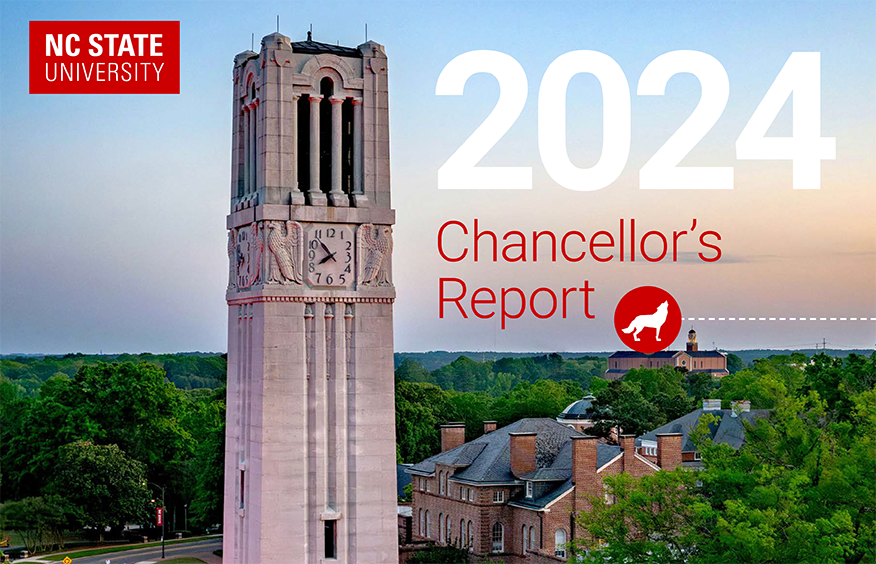
Some standout elements of NC State’s 2024 Chancellor’s Report include:
- Two letters from the Chancellor introducing the report and expressing his thanks to the university as he retires.
- A map of key buildings at the university that frames the design of the PDF and provides a reference for the contents.
- Shoutouts for specific faculty members and student athletes who have contributed significantly to the university’s success.
Read NC State University’s Full Annual Report.
Children’s Healthcare of Atlanta Foundation
The Children’s Healthcare of Atlanta Foundation is the charitable giving arm of one of the largest pediatric medical providers in the United States (Children’s Healthcare of Atlanta, or CHOA). Their 2023 annual report is a digital book with unique animations and a graphic design style that captures the organization’s desire to help children live healthier, happier lives.

Highlights of this annual report include:
- Spotlight features on individual patients and key supporters with photos and quotes.
- A detailed financial breakdown of how their general revenue and the funding from their $1 billion capital campaign are being used.
- An opportunity to get involved with a community campaign as an accessible call to action.
Read the CHOA Foundation’s full annual report.
Final Thoughts
Your nonprofit’s annual report empowers you to highlight your achievements and recognize everyone who has helped you along the way. With the tips and strategies in this guide, you can create an effective report that donors look forward to receiving every year. Additionally, remember that annual reports from other nonprofits also provide valuable information for identifying and building relationships with potential donors.
For more information on effective nonprofit fundraising, check out these resources:
- Major Gifts: A Guide to Securing Large Donations. Dive deeper into the process of securing major gifts from the donors you’ll feature in your annual report’s list of major contributors.
- What Is a Capital Campaign? Ultimate Guide for Nonprofits. Discover the ins and outs of the most significant fundraising initiatives you might provide information on in your annual report.
- Fundraising Intelligence: Using AI to Enhance Philanthropy. Explore how to leverage AI-powered tools to fundraise and report on your organization’s activities more intelligently.