Ready to screen more donors and access the freshest insights possible? Get started with market-leading prospect research and AI fundraising tools from DonorSearch!

Ready to screen more donors and access the freshest insights possible? Get started with market-leading prospect research and AI fundraising tools from DonorSearch!
Prospect Research FAQ
What is prospect research?
Prospect research is a technique used by nonprofit fundraisers, major gift officers, and development teams to identify high-impact donors within and beyond an organization’s current donor pool. Through this process, nonprofits gather an immense amount of data—information about donors’ backgrounds, past giving histories, wealth indicators, philanthropic motivations, and more details that help determine prospects’ likelihood of giving.
(Note that prospect research may also be referred to as donor prospecting, screening, or donor research.)
How does prospect research differ from wealth screening?
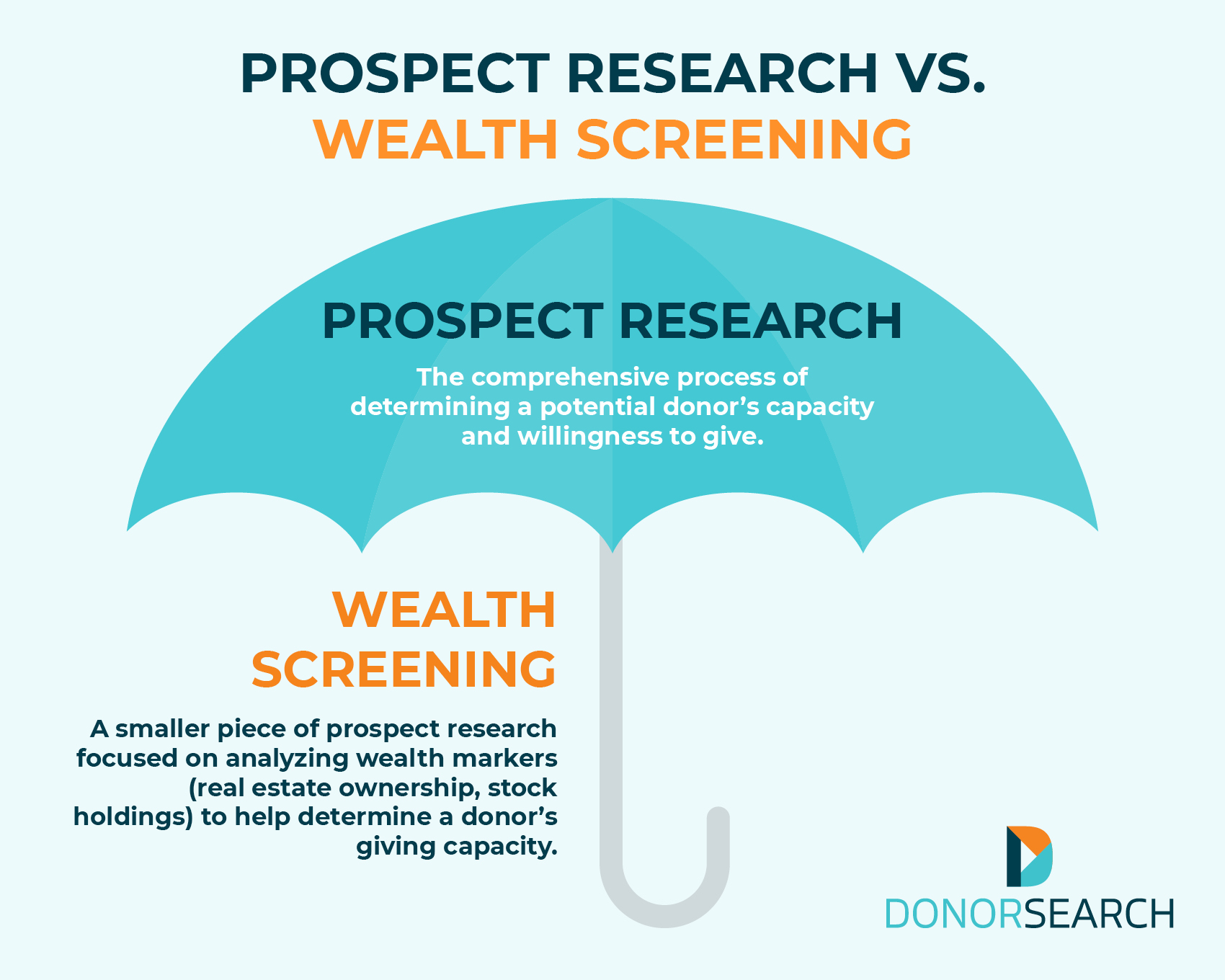
Prospect research refers to the comprehensive process of determining a potential donor’s capacity and willingness to give. Traditional wealth screening is a smaller piece of the prospect research puzzle. Wealth screening typically focuses on analyzing current and prospective donors’ wealth markers, such as real estate ownership and stock holdings, to help your organization determine a donor’s financial giving capacity.
However, just because a donor has the capacity to make a significant gift to your organization doesn’t necessarily mean they’d be willing to do so. Prospect research that considers a donor’s philanthropic tendencies and affinity for your mission provides a fuller picture of potential donors than wealth alone.
What misconceptions exist around prospect research?
Besides conflating prospect research with wealth screening, one of the most common misconceptions about prospect research is that nonprofits use it solely to identify new donors when planning a campaign or initiative. In reality, prospect research should be an ongoing process, used for new donor identification as well as:
- Learning more about the existing supporters in your donor database.
- Staying up-to-date on prospects’ wealth and philanthropic details throughout the cultivation process.
- Developing data-driven donor stewardship and retention strategies after a prospect has converted.
Additionally, prospect research lays the foundation for donor engagement but should not replace human-centered relationship-building. Use the information you gather through screening to outline tailored outreach and cultivation strategies, then get to know each prospect personally so you can create an individualized engagement plan and make a fundraising ask they’ll be receptive to.
Who conducts prospect research?
At most nonprofits, prospect researchers and major gift officers (MGOs) are responsible for conducting, interpreting, and acting on prospect research. Prospect researchers use resources such as historical donor data, wealth screening tools, and public records to evaluate prospects’ real estate and stock ownership, philanthropic interest, giving affinities, and more.
MGOs leverage insights from these findings to prioritize portfolios and plan tailored cultivation strategies for prospects. When MGOs have this deep understanding of a prospect’s background and philanthropic interests before reaching out, they can build more authentic relationships, have more productive conversations, and ultimately make more specific and effective appeals.
In a broader context, various sectors in the nonprofit space conduct prospect research, or could benefit from doing so, to enhance their fundraising efforts:
- K-12 Schools: Screening students’ families helps you see how much they could contribute to various giving campaigns throughout the school year.
- Colleges, Universities, and Sororities and Fraternities: Prospect research enables targeted segmentation of potential donors—especially alumni—resulting in more successful solicitation efforts.
- Healthcare Organizations: Early and frequent research can help grow grateful patient donor programs.
- Advocacy and Social Service Organizations: Large volunteer pools and event attendee lists consistently offer new prospects to screen and analyze.
- Arts and Culture Organizations: Screening single-ticket purchasers, special event attendees, members, and consistent donors can lead to more support.
- Environmental Groups: With a calendar full of events and volunteer activities, these organizations should screen attendees for more targeted donor cultivation.
- Faith-Based Organizations: Churches, mosques, synagogues, and other places of worship can pinpoint congregants who could make major gifts through prospecting.
What areas of nonprofit fundraising is prospect research used for?
Prospect research is most useful for identifying potential donors who could contribute significant gifts, since converting them requires more tailored efforts than lower-level supporters. These include supporters who give:
- Major gifts—the largest individual contributions your organization receives, which are essential for funding many mission-critical initiatives.
- Capital campaign donations, particularly during the quiet phase, in which you’ll solicit a set amount of major gifts.
- Annual fund contributions—both so you can secure the 75% of annual funding that typically comes from major gifts, and so you know which annual donors you can ask to upgrade their support each year.
- Planned gifts such as bequests, charitable gift annuities, and charitable remainder trusts.
What are the benefits of prospect research?
Prospect research can enrich your nonprofit’s operations in many ways, allowing you to:
- Refine your major donor fundraising strategy: Prospecting saves you time and money by helping you focus your efforts on candidates who are most likely to give. Plus, by screening both new and existing supporters, you can expand your reach while realizing the untapped potential in your current donor base.
- Optimize ongoing fundraising activities: With a wealth of data at your fingertips, your organization can discover trends in its fundraising efforts and refine its goals and strategies for the future.
- Identify corporate giving opportunities: Note any donors eligible for corporate giving programs, such as matching gifts or volunteer grants, when gathering information on donors’ employment, giving history, and nonprofit involvement.
- Fill gaps in donor data: Donors may move, get married, or change their phone numbers. Prospect research helps you update inaccurate or out-of-date information so you can always stay in touch with your supporters.
Essential Prospect Research Tools
To successfully conduct prospect research for your nonprofit, you’ll need a solid understanding of its key elements—the screening tools you’ll use and the indicators you’ll look for in the data you gather. Let’s explore each of these elements.
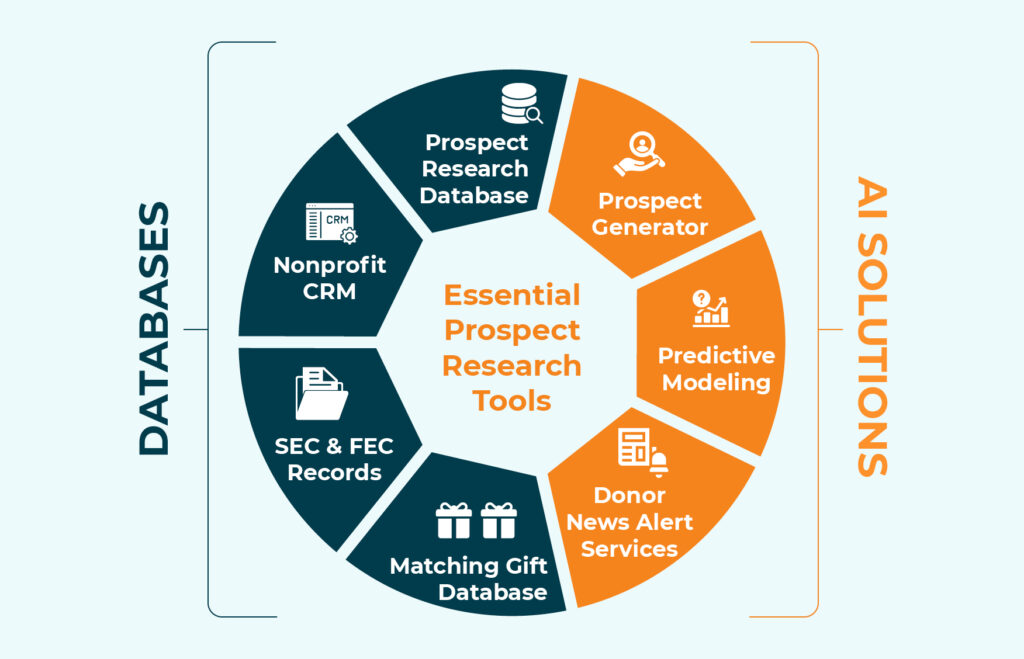
Like most contemporary fundraising processes, successful prospect research starts with the right software. Ensure your organization has the following solutions in its tech stack before you begin:
-
Prospect Research Database
A comprehensive database such as DonorSearch’s top-of-the-line solution will inform your organization about prospects’ charitable giving, business connections, real estate ownership, stock holdings, corporate giving opportunities, and passion for your mission.
-
Your Nonprofit's CRM
Your internal database can be a starting point for learning more about current donors and their connections to new prospects, as well as identifying potential major donors within your existing supporter base.
-
SEC Investment Records and FEC Political Contribution Records
These government records can supplement your prospect research data to show you which prospects or donors have the capacity and propensity to give a large gift.
-
Prospect Report Generators
A prospect report generator like DonorSearch’s ProspectView Online 2 (PVO2) can provide you with lists of prospects who have supported causes similar to yours, as well as AI-powered reports that summarize essential, actionable information about potential donors.
-
Predictive Modeling Solution
These AI tools (including DonorSearch Ai and Enhanced CORE, the most advanced machine learning solutions for nonprofits) organize your prospect lists and make suggestions about which donors to reach out to first so you can improve results while saving time and resources.
-
Matching Gift Database
A matching gift database lets you know which donors and prospects can request donation matches from their employers, providing insights into their professional connections and pointing out opportunities to bring in additional revenue through corporate philanthropy.
-
Donor News Alert Services
Donor news alert services are helpful tools for monitoring information about your prospects over time. These platforms monitor everything from SEC filings to obituaries to notify nonprofits about prospects’ significant life events. Then, you can reach out accordingly with personalized messages to cultivate major gifts.
In addition to these tools, simple internet searches and deep dives into prospects’ social media profiles (such as LinkedIn, Facebook, and Instagram) can help reveal who your donors are and what they value.
Discover how DonorSearch’s wealth and philanthropic screening tools, PVO2, DonorSearch Ai, Enhanced CORE, and our platform integrations can help your nonprofit learn about potential donors in detail!
Prospect Research Indicators to Know
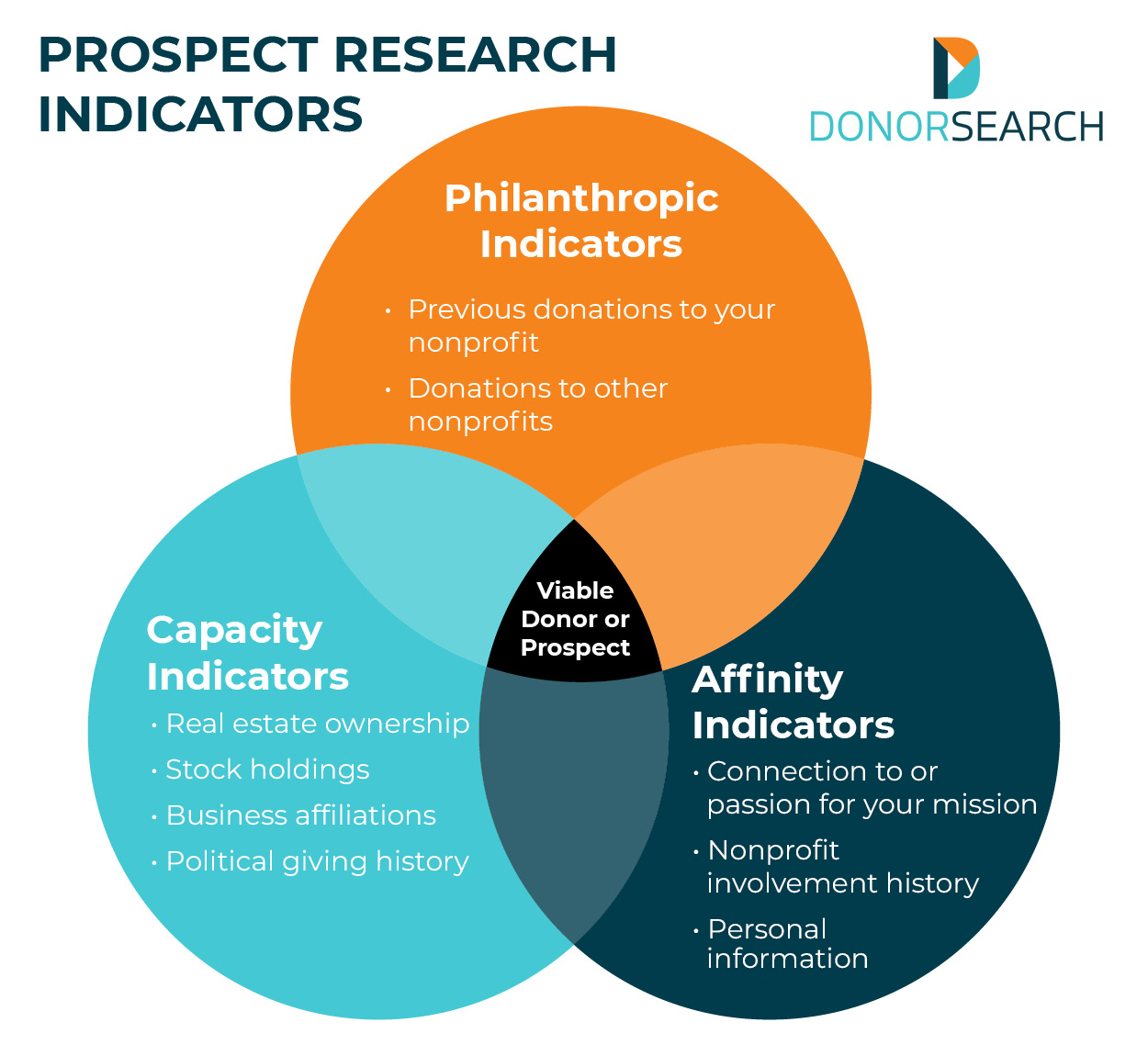
During the prospect research process, you’ll be looking for three kinds of indicators (or markers) for each potential donor: capacity (wealth) indicators, philanthropic indicators, and affinity (warmth) indicators. Let’s dig into each category in more detail.
Capacity Indicators
These indicators help you know whether a donor or prospect is in a financial position to give a large gift, and can assist you when determining how much to ask for down the line. Here are a few examples of wealth indicators:
-
real estate ownership
Individuals who own real estate valued at $2+ million are 17 times more likely to give philanthropically than the average person. More generally, knowing about the property a prospect owns can help you make inferences about their finances.
-
SEC transactions
Stock holdings at publicly-traded companies are reported to the U.S. Securities and Exchange Commission (SEC), and these records are publicly accessible through SEC.gov. They provide a clear window into a key aspect of a donor’s finances.
-
business affiliations
These connections can tell you about a donor’s career and professional life—and by extension, their financial situation.
-
political giving
Someone who has donated significant amounts of money to political campaigns has the financial capacity to make a major gift. Plus, you may find that a prospect’s political leanings give them a greater affinity for your mission.
Philanthropic Indicators
These indicators show that a donor or prospect may be willing to contribute to your organization because they have philanthropic tendencies. The two main philanthropic markers are:
-
previous donations to your nonprofit
Past giving is one of the clearest signs that a prospect is willing to give again, and they may even upgrade their support as their relationship with your organization grows.
-
donations to other nonprofits
If a donor has given to other nonprofits, it’s a solid indication of charitable habits, especially if these organizations have similar missions to yours. Reference other nonprofits’ annual reports and recognition records to find this information.
Affinity Indicators
These markers indicate that a donor or prospect may be willing to give to your organization because they’re passionate about your specific work. Some examples include:
-
deep love for your cause
Whether they care about your nonprofit’s mission because they’re a grateful recipient of your services or simply because they’re passionate about your vision for a brighter future, strong connections to your cause let you know that a donor or prospect may say “Yes!” to a donation request.
-
nonprofit involvement history
Donors who truly value philanthropy and your organization's mission often give back in non-monetary ways as well—whether by volunteering, making in-kind donations, attending fundraising events, serving on your board, or advocating for your cause in the community. Keep an eye out for prospects who have also engaged with other similar nonprofits in these ways.
-
personal information
This category includes prospects’ demographic details, hobbies, interests, values, family ties, and other aspects of their background, which can all influence their philanthropic decision-making.
Remember that in thorough prospect research, you can only say you’ve found a viable prospect if they exhibit all three types of indicators. The greater these markers are in quantity and quality, the higher priority the prospect should be on your outreach list.
Popular Approaches to Donor Prospecting
1. Conducting In-House Prospect Research
If your nonprofit is just starting out or if you have a tight budget, you may have an existing staff member (usually someone from your development team) take responsibility for prospecting. This isn’t a sustainable long-term solution, but it allows you to start prospect research and thereby fuel your nonprofit’s growth. There are plenty of great resources (guides, classes, webinars, etc.) available to help your team develop these skills.
Another option is to hire or designate full-time research staff. This is best if you have a large prospect pool and need to free up other staff members’ time. If you hire externally, look for candidates with strong analytical skills, experience in fundraising and database management, and the ability to synthesize data.
2. Working With a Prospect Research Consultant
Another option is to hire a prospect research consultant. If you’re considering this approach, ask the following questions:
- What are we looking to gain? If you know what goals you want to accomplish, you’ll be able to find the right partner to fulfill those needs.
- What kind of access do we need to our consultant? Decide whether you need a consultant who will be available full-time or part-time, and consider whether you’re willing to work with a consultant remotely or prefer someone local.
- Does the consultant have samples of their work? Request portfolios of consultants’ past research, reach out to references, and review client testimonials. This preview of their work gives you a sense of the options you’ll have if you choose them and will help you determine the quality of their work.
3. Partnering With a Prospect Screening Company
A prospect screening company (like DonorSearch!) can be a valuable partner, especially if you want to find major donors in your current supporter base. These experts can help you identify which of your donors would be ideal major-giving candidates and how much to ask for from them.
If you have many records in your donor database, a bulk screening can help you sort through masses of information by pulling only the most pertinent and useful donor data. A screening company can also help your organization manage prospects as it grows. If you’re acquiring new supporters regularly, screening services can help you track, sort, and assess new prospects.
Choose a company that will seamlessly integrate its tools with your existing software and aligns with your normal workflow. This ensures your data will always be easy to access when you need it. Many screening companies offer comprehensive integration support to make the data transition as smooth as possible.
How to Conduct Prospect Research
-

1. Create a Plan of Action
To ensure your team takes the most responsible and reasonable approach possible, it’s best to plan exactly how you’ll handle the analysis process before conducting research. Clarify your goals, create a timeline for completing key tasks, delegate internal responsibilities across your research and development teams, and ensure you have all of the tools and external help you may need.
-

2. Clean up Your Database
Remember that your organization’s donor database will be a valuable tool during the prospecting process. So, cleaning up your data before conducting fundraising research is essential to receiving accurate, helpful results.
Implementing data hygiene practices typically involves consolidating duplicate profiles, updating outdated contact information, and removing lapsed donors from your records. Keep in mind that professional data appending services can take care of much of this work for you.
-

3. Conduct and Validate Screenings
When your data is ready, start leveraging your prospect research tools or send records to your screening company. When you receive your results, ensure they’re accurate and logical. This way, you’ll spend less time accounting for misinformation like outdated personal details or data pulled for a different person who shares a name with one of your potential donors.
-

4. Analyze Your Results
Your screening results will provide a wealth of useful information, but you have to analyze that information thoroughly to make the best use of it. Start by organizing portfolios for each of your prospects and creating individual profiles in your CRM for any new potential donors. AI-powered predictive modeling tools are also useful for determining the prospects you should reach out to first.
-

5. Make a Solicitation Plan
Creating a solicitation plan can help you structure the process and standardize it for future fundraising efforts. Set goals for how much you want to raise and how many donors you plan to solicit gifts from. Then, group prospects by shared characteristics (demographics, giving history, philanthropic interests, etc.) and use these segments to tailor your outreach messages to individual donors.
-

6. Solicit Donors
Prospecting provides a better sense of how much you should ask for, the prospect’s preferred communication channels, and their motivations for supporting your nonprofit. Use this information to build personal relationships with each prospect, and keep track of your efforts in your database so that your team can make adjustments. When the time is right to request a donation—which will be different for each prospect—leverage what you know about them to craft a fundraising ask they’ll be receptive to.
-

7. Assess Your Performance
Once you’ve gone through all of the steps of researching, cultivating, and soliciting, take a step back and assess how donor prospecting is going for your organization. There is a learning curve to prospect research, but in the end, the effort you put into refining your technique will be well worth it as you find more prospects and bring in significant gifts for your organization!
Want to learn how prospect research supports real nonprofits? Explore the following case studies to see the results of leveraging DonorSearch to support large-scale fundraising efforts:
Lambda Chi Alpha Educational Foundation
The Lambda Chi Alpha Educational Foundation supports educational initiatives for the Lambda Chi Alpha fraternity’s chapters, inspiring young men to become leaders and philanthropists. But with 175 active chapters and a dispersed, volunteer-led network, the foundation needed a faster, more effective way to identify and reach out to high-capacity donors.
Using DonorSearch’s data-driven platform and support from its experts, the foundation was able to better prioritize major donor prospects on a national scale and empower chapters with the analytics needed to fuel local fundraising. This brought powerful results, such as:
- Analyzing 112,000 records, which unveiled a significant untapped potential amounting to $33.9 billion in donor capacity.
- Record-breaking fundraising campaigns—Lambda Chi Alpha has raised $13.5 million since 2019 and fulfilled $7.2 million in grants from 2020 to 2024.
- Empowering chapters to exceed fundraising targets. For example, the University of South Dakota raised $3.6 million against its $3 million target.
Check out this video to learn more about the foundation’s story:
RMHC-CNI provides housing and support services to families with hospitalized children. The organization has a lean research team and ambitious fundraising goals. However, they needed a new solution to replace the two platforms they used to manage donor research, as the disconnect led to inefficiencies, missed opportunities, and higher costs.
RMHC-CNI implemented DonorSearch to provide a more streamlined solution and access to robust features. Using tools like behavior-based scoring models, prospect alignment analysis, organization-level prospecting, and wealth screening, RMHC-CNI saw much-needed results that included:
- Securing multiple million-dollar gifts by leveraging DonorSearch’s prospect insights in its cultivation efforts.
- Elevating prospecting strategies by using “Most Likely to Respond” and RFM scoring to identify new high-capacity prospects and loyal donors who had been overlooked.
- Streamlining prospecting work by consolidating all tools and data into an integrated system.
To learn more, watch this video about our work with RMHC-CNI:
Final Thoughts
Prospect research helps you find people with the means and passion necessary to contribute generously to your cause. The process may seem daunting and complex at first, but as you learn what to look for, secure the right support for your team, and leverage the right tools (like DonorSearch’s comprehensive prospect research database), you’ll be able to find more donors for your mission!
For more information about prospect research and its applications, check out these resources:
- Donor Analytics: Making the Most of Your Nonprofit’s Data. Discover how to take full advantage of your nonprofit’s most valuable asset: your data.
- Donor Acquisition: How to Attract High-Impact Supporters. See how strategic, data-informed acquisition efforts will help you reach new supporters who are passionate about your cause.
- AI Fundraising: How to Build Your Nonprofit’s Strategy. Explore the growing field of AI fundraising and learn how artificial intelligence can elevate your organization’s approach to prospecting.

Prospect research empowers your nonprofit to connect with the right donors. Discover how DonorSearch’s platform can take your strategy to new heights!